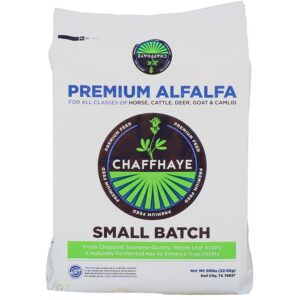
Hay
Hay and straw are the backbone of livestock feeding and bedding on any farm or hobby homestead. Whether you’re feeding horses, cattle, goats, rabbits, or backyard chickens, having a dependable source of quality forage on hand keeps your animals comfortable and your feeding program on track. Nixa Hardware & Seed Co. carries hay and straw options to supplement your feeding program when pasture is short, bales are hard to source, or you just need a smaller, manageable quantity. Good hay should smell clean and fresh. If it smells musty, pass on it.
Showing the single result
Helpful Questions & Answers
Find answers to common questions about Hay from the Nixa Hardware & Seed Co team.
What Is Hay
We look at it as the backbone of a solid winter feeding program. It is simply pasture grass or clover that was cut at its nutritional peak and dried out in the field before being tightly packed together. Good Hay should be dust-free and smell fresh enough to make you consider taking a nap on it yourself. While it might look like a pile of dried weeds to some, to a hungry cow in January, it is the most important thing on the property. We suggest keeping yours under cover to prevent mold from ruining all the hard work the sun put in during July.
How Much Does A Bale Of Hay Weigh
We usually see small square bales coming in at about fifty pounds, though they can vary depending on whether it is grass or a heavy alfalfa mix. If the person running the baler was in a particularly ambitious mood, you might find some that push sixty-five pounds and test the limits of your twine. On the other end of the spectrum, those large round bales of Hay can easily weigh half a ton or more. We always suggest checking the moisture content, as a bale that feels too heavy might be holding onto too much water, which is a recipe for trouble in the barn.