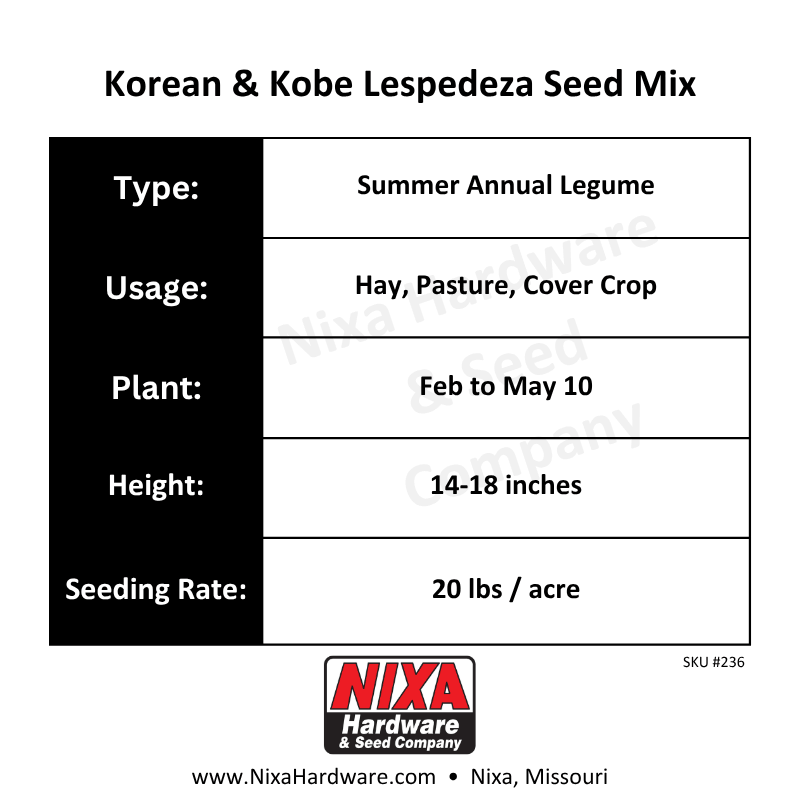
Korean & Kobe Lespedeza Seed Mix
$2.18
Bulk Seed Discount
In stock
-
Free Store Pickup
Available for MO, AR, KS, OK addresses at checkout
-
Shipping
Ships to lower 48 (excl. CA) on eligible items. -
Local Delivery
Available by phone; call to place order & schedule delivery
-
Shop In-Store
Open Mon–Sat, 8 am–6 pm for all items.
Type
Growing Season
Summer
Planting Dates
Height
Seeding Rate
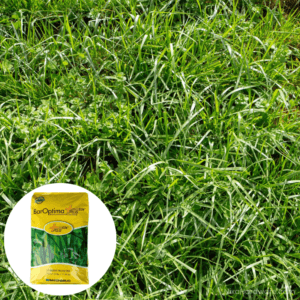
Korean & Kobe Lespedeza Seed Mix combines two complementary annual lespedeza varieties to create a versatile summer forage solution that thrives when other pastures decline. This strategic blend delivers exceptional heat and drought tolerance while producing quality forage from June through October. With its ability to flourish in poor, acidic soils and reputation for promoting impressive weight gains in cattle, this non-bloating legume effectively fills the summer production gap without requiring lime or extensive soil amendments.
Key Features of Korean & Kobe Lespedeza Seed Mix
Additional Information
The Korean & Kobe Lespedeza Seed Mix delivers strategic advantages through its carefully balanced combination of two complementary annual lespedeza varieties:
| Feature | Korean Lespedeza | Kobe Lespedeza |
|---|---|---|
| Maturity | Earlier (summer) | Later, persists into autumn |
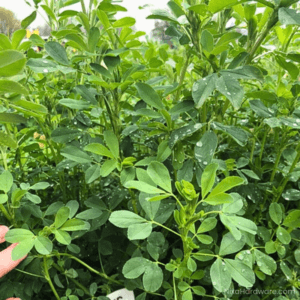
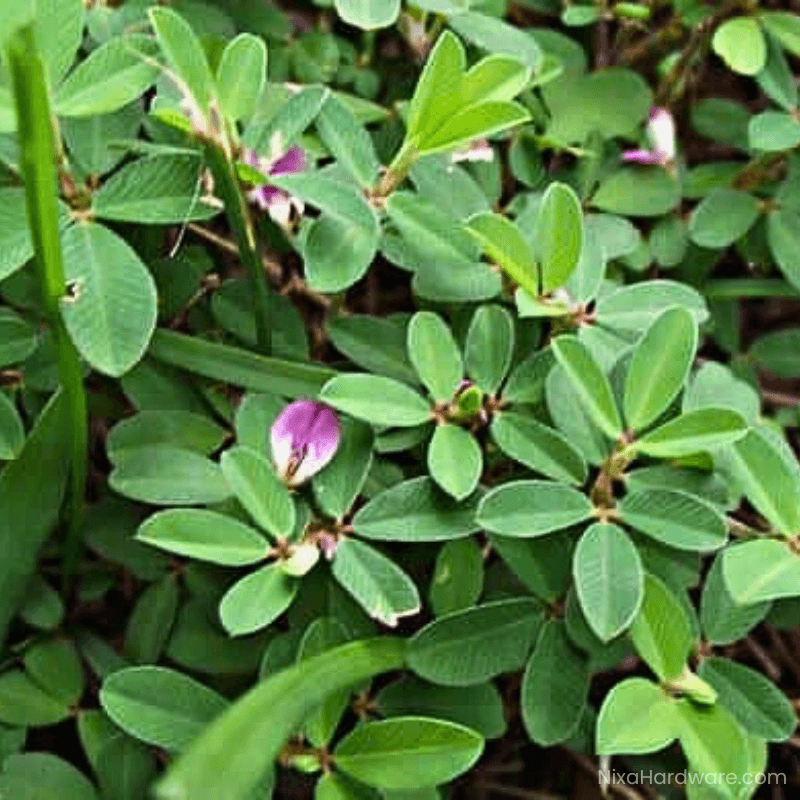
| Leaflet Size | Broader | Narrower |
| Growth Habit | Larger, coarser, more upright | More prostrate (low-growing) |
| Soil pH Tolerance | Less tolerant of acidity (best at pH 6.0-6.5) | More tolerant of acidity (can tolerate pH as low as 4.5) |
| Seed Color | Shiny black | Stippled |
| Adaptation | Upper South, Midwest | Southern U.S. |
| Best Use | Early grazing, hay | Longer grazing, hay |
To maximize natural reseeding and ensure year-after-year performance without replanting, follow this management approach: remove livestock by August 15th to allow plants to bloom in September, set seed in October, then return animals in November. This rotation enables the lespedeza to complete its lifecycle while providing valuable fall grazing on mature plants. For establishment success, plant from mid-winter to early spring at ¼ to ½ inch depth. Importantly, avoid applying nitrogen fertilizer, as even moderate use will increase competition from grasses and severely reduce lespedeza production. This mix creates an ideal forage option for wildlife food plots, attracting game birds and deer while simultaneously providing valuable summer grazing or hay for domestic livestock during the challenging “summer slump” when cool-season pastures typically underperform.