
Inoculant
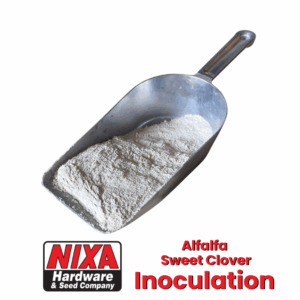
Struggling with weak, slow-growing legumes or low forage yields? Without the right bacteria, your legume seeds can’t effectively take nitrogen from the soil, leading to poor plant health and reduced productivity. Using Inoculant adds beneficial bacteria that boost nitrogen fixation, helping your plants grow stronger and greener naturally. This means healthier pastures, higher yields, and less reliance on costly synthetic fertilizers. It also improves soil fertility over time, supporting long-term farm productivity. For silage, inoculants enhance fermentation, reducing spoilage and preserving feed quality. Applying inoculant ensures your forage and pasture crops reach their full potential, even in challenging soil conditions.
Showing the single result



Helpful Questions & Answers
Find answers to common questions about Inoculant from the Nixa Hardware & Seed Co team.
What Does Inoculate Mean
Think of inoculating as a way of providing your seeds with a specialized toolkit for survival. It is the practice of applying a live bacterial culture, usually in the form of a dark, peat-based powder or a liquid spray, directly to the surface of the seed. This ensures that the beneficial microbes are in the immediate vicinity of the root as soon as it emerges. For anyone working with legumes like Austrian Winter Peas or Crimson Clover, this step is vital because these plants have a unique relationship with certain bacteria that other plants do not. Without this process, your crop might grow, but it will have to work much harder and likely require a lot more store-bought fertilizer to reach its full potential. It is a straightforward mechanical task that pays off in healthier plants and better soil over time.
How Does Inoculation Work
Success with inoculation relies on a complex chemical “conversation” that takes place in the soil. The plant roots send out a signal to attract the specific bacteria they need, and the bacteria respond by triggering the growth of those helpful root nodules. Here in Christian County, our often rocky or acidic soils can be a tough environment for native microbes, so adding a fresh batch of high-quality inoculant ensures that this partnership gets established quickly. Once the connection is made, the plant stops relying on the nitrogen already in the soil and starts pulling it from the air instead. This not only feeds the current crop but often leaves behind a nitrogen credit in the ground for whatever you decide to plant next season. It is a natural, biological process that turns a simple seed into a self-fertilizing powerhouse.