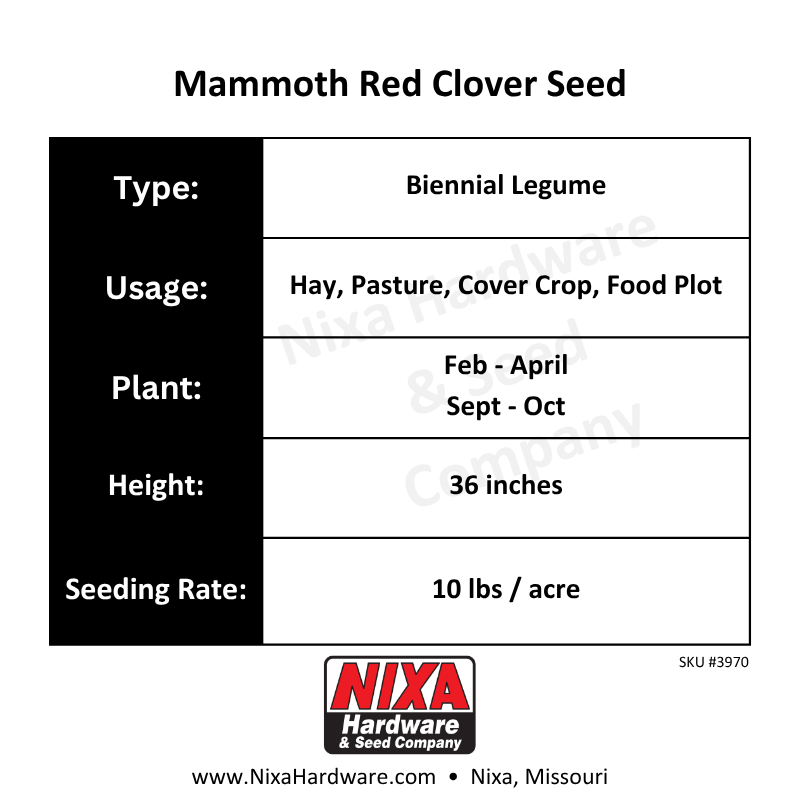
Mammoth Red Clover Seed
$2.96
Bulk Seed Discount
In stock
-
Free Store Pickup
Available for MO, AR, KS, OK addresses at checkout
-
Shipping
Ships to lower 48 (excl. CA) on eligible items. -
Local Delivery
Available by phone; call to place order & schedule delivery
-
Shop In-Store
Open Mon–Sat, 8 am–6 pm for all items.
Type
Growing Season
Fall
Planting Dates
Sept to Oct
Height
Seeding Rate
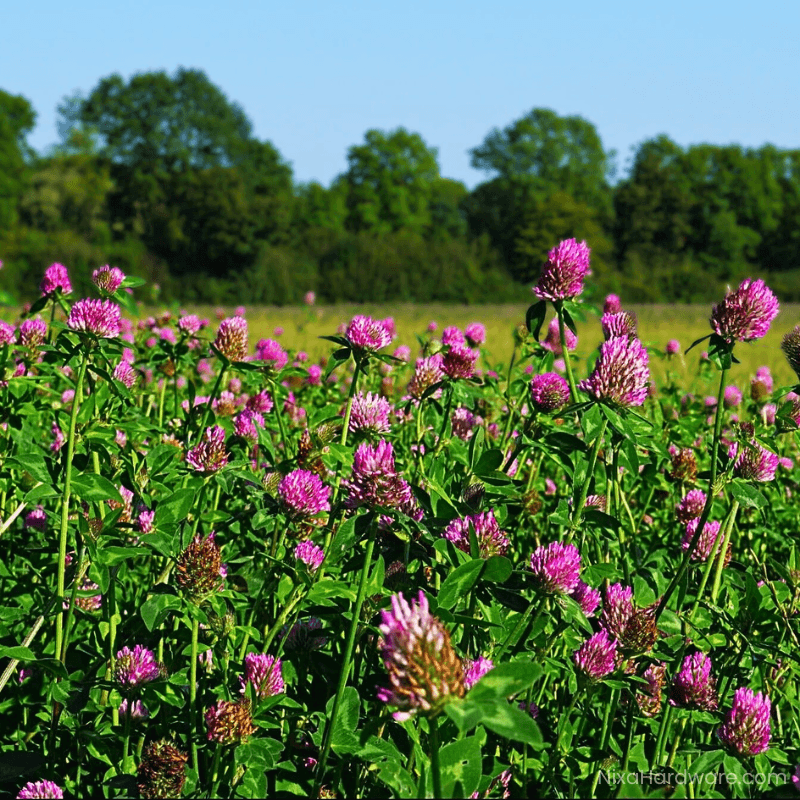
Mammoth Red Clover Seed stands tall among biennial legumes with its impressive three-foot height and deep taproot system that works wonders for soil health. This fast-growing clover seed variety excels at breaking through compacted clay soils while pumping valuable nitrogen back into your fields. The coarse-stemmed plant thrives in challenging conditions where other clovers struggle, making it a reliable choice for soil improvement and forage production.
Key Features of Mammoth Red Clover Seed
Additional Information
Soil health advocates recognize Mammoth red clover’s unique ability to access nutrients that shallow-rooted crops simply cannot reach. The variety’s aggressive taproot system mines phosphorus and other minerals from depths of four to six feet, bringing these nutrients up to surface layers where future crops can utilize them. This deep soil penetration also creates natural drainage channels in heavy clay soils, improving water infiltration long after the clover has completed its two-year cycle.